
What is accreditation?
Accreditation is a formal and transparent quality-assurance procedure through which an independent body verifies—based on defined, internationally compatible standards whether higher education institutions and/or study programmes meet the minimum quality requirements. Accreditation procedures determine the status and recognition associated with it, as well as the legal status of institutions and study programmes for a specified period of time. In higher education, accreditation provides society and relevant stakeholder groups with assurance that the quality of teaching and learning meets international requirements. At the same time, it increases transparency in an increasingly complex national and international higher education market.
Core functions of accreditation
Protecting students from offers that are not proven to lead to the intended outcomes (e.g., employability prospects, international recognition of the awarded degree, etc.);
Ensuring transparency and comparability, thereby expanding choice in the education and labour market both nationally and across the European Higher Education Area;
Facilitating international mobility through mutual recognition of studies and improving graduates’ opportunities in the European labour market;
Creating a basis for competition among higher education institutions for students and for public or private funding.
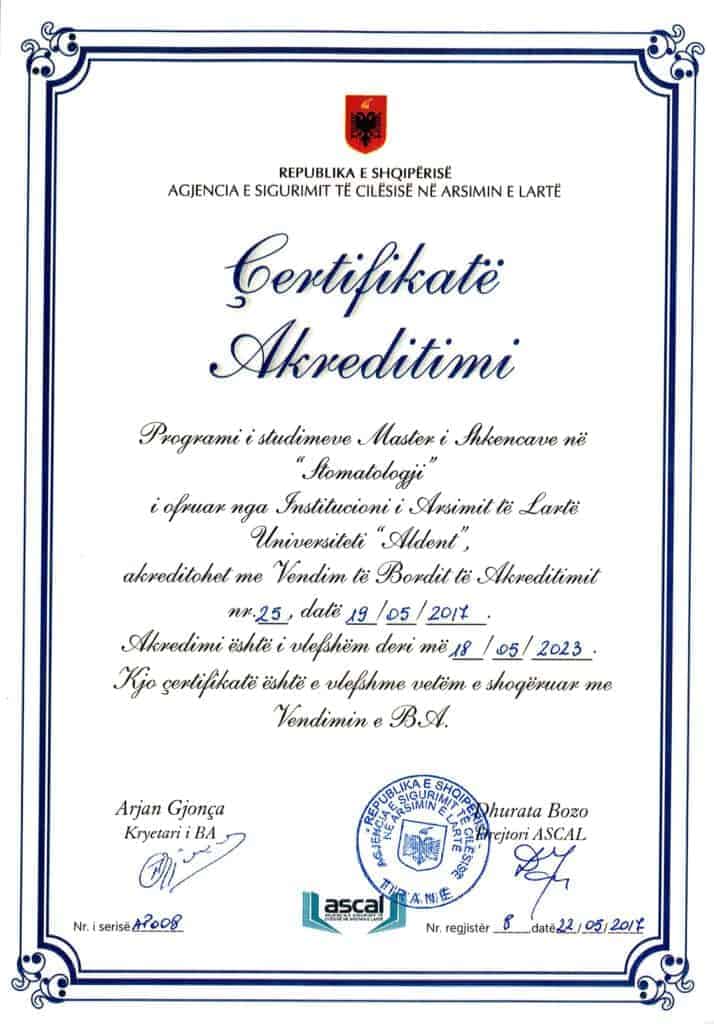
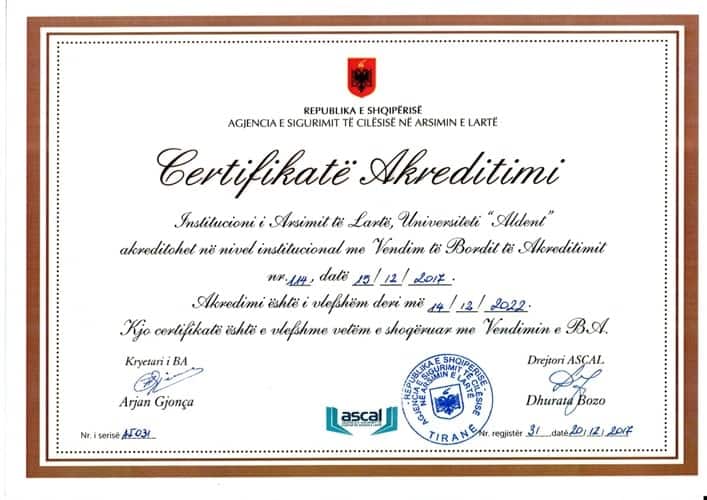
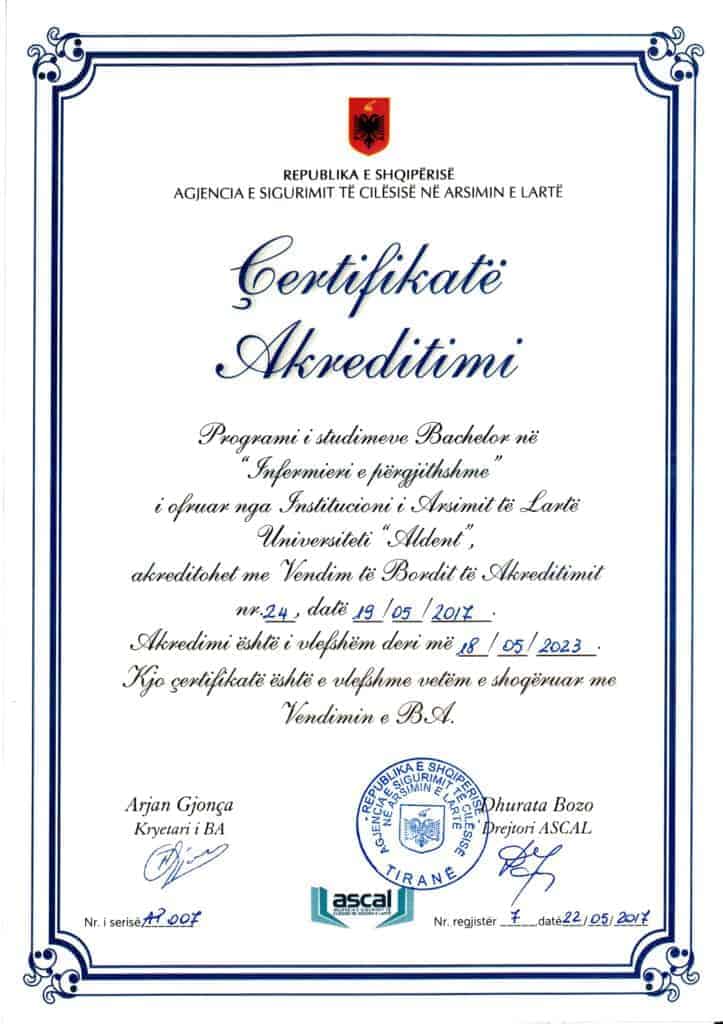
Aldent University accreditation status
Aldent University is a private higher education institution licensed by Decision of the Council of Ministers No. 673, dated 27.09.2006 . The institution offers 9 study programmes across three cycles of study. It is institutionally accredited by an Order of the Minister of Education and Science. All programmes/departments of Aldent University are accredited by Accreditation Board.